Social Security COLA Projections 2026: Anticipating a 3.2% Boost

Anúncios
The latest Social Security COLA Projections for 2026 anticipate a 3.2% boost in payments, reflecting ongoing efforts to align benefits with the rising cost of living for millions of beneficiaries.
Anúncios
For millions of Americans relying on their monthly benefits, understanding the annual cost-of-living adjustment (COLA) is paramount. The latest Social Security COLA Projections for 2026 indicate an anticipated 3.2% boost in payments, a significant adjustment designed to help beneficiaries keep pace with inflation and maintain their purchasing power. This projected increase is more than just a number; it represents a vital lifeline for retirees, disabled individuals, and other Social Security recipients.
Understanding the Cost-of-Living Adjustment (COLA)
The Cost-of-Living Adjustment, or COLA, is a critical mechanism designed to protect the purchasing power of Social Security benefits from the erosive effects of inflation. Each year, the Social Security Administration (SSA) reviews economic data to determine if an adjustment is necessary. This ensures that the fixed incomes of beneficiaries do not lag behind the rising costs of everyday essentials, from groceries to healthcare.
Anúncios
COLA calculations are not arbitrary; they are based on a specific economic index. This index measures changes in consumer prices, providing a standardized way to assess inflation’s impact on household budgets. Without COLA, the real value of Social Security benefits would diminish over time, placing undue financial strain on those who depend on them most.
how COLA is calculated
The COLA is primarily determined by the Consumer Price Index for Urban Wage Earners and Clerical Workers (CPI-W). Specifically, the SSA compares the average CPI-W for the third quarter of the current year (July, August, September) to the average CPI-W for the third quarter of the last year in which a COLA was payable. The percentage increase, if any, rounds to the nearest one-tenth of one percent and becomes the COLA for the following year.
- Data Source: The Bureau of Labor Statistics (BLS) provides the CPI-W data.
- Measurement Period: July, August, and September are crucial months for data collection.
- No Decrease Clause: By law, Social Security benefits cannot decrease due to COLA, even if the CPI-W declines.
This systematic approach ensures that COLA adjustments are transparent and directly tied to real-world economic conditions. The upcoming 3.2% projection for 2026 is a direct reflection of anticipated inflationary pressures, aiming to provide a necessary buffer for beneficiaries.
In essence, COLA serves as an annual economic recalibration, ensuring that the financial security promised by Social Security remains relevant and effective in a dynamic economic landscape. It’s a fundamental aspect of the program’s design, safeguarding the financial well-being of millions of Americans.
The 3.2% COLA Projection for 2026: What it Means
The projected 3.2% increase in the Social Security COLA for 2026 signals a significant adjustment for beneficiaries. This percentage, while a projection, offers a crucial glimpse into the financial landscape for those relying on Social Security payments. It suggests that economic forecasts anticipate continued inflationary pressures, necessitating a substantial boost to maintain purchasing power.
A 3.2% increase translates directly into more money in beneficiaries’ pockets each month. For an individual receiving an average Social Security benefit, this could mean a noticeable difference in their ability to cover rising living expenses. It’s an affirmation that the system is designed to respond to economic shifts, even if imperfectly.
impact on average benefits
To illustrate, if the average Social Security benefit for a retired worker is, for example, $1,800 per month, a 3.2% COLA would add approximately $57.60 to their monthly payment. While this might seem modest to some, for many, it can be the difference between covering essential utilities, prescription costs, or even a few extra groceries each month. These increments accumulate over time, making a substantial difference in annual income.
- Increased Monthly Payments: Direct rise in the amount received by beneficiaries.
- Inflation Buffer: Helps offset the rising costs of goods and services.
- Financial Stability: Contributes to the overall economic security of recipients.
This projected increase is particularly relevant given recent economic volatility. Inflationary trends, while showing signs of moderation, have remained a concern for many households. The 3.2% COLA aims to address these concerns head-on, providing a much-needed financial adjustment. It underscores the ongoing commitment to ensuring that Social Security benefits remain a reliable source of income, adapting to the economic realities faced by its recipients.
Factors Influencing COLA Projections
Several key economic indicators and trends play a pivotal role in shaping COLA projections. Understanding these factors provides insight into why the Social Security COLA Projections for 2026 are currently set at 3.2%. The primary driver, as mentioned, is inflation, specifically as measured by the CPI-W, but other underlying economic forces also contribute to the overall outlook.
The interplay of these elements creates a complex economic environment that the Social Security Administration must navigate. Predicting future inflation accurately requires careful analysis of current economic data, geopolitical events, and consumer spending patterns. These projections are not static; they can shift as new economic information becomes available.
economic indicators and trends
Current inflationary trends, driven by factors such as supply chain disruptions, energy price fluctuations, and labor market dynamics, are central to the 2026 COLA forecast. If these pressures persist or intensify, the actual COLA could be higher. Conversely, a significant easing of inflation could lead to a lower final adjustment.
- Consumer Price Index (CPI-W): The most direct determinant, reflecting changes in prices for urban wage earners.
- Energy Prices: Volatility in oil and gas prices directly impacts transportation and utility costs, influencing CPI-W.
- Wage Growth: Strong wage growth can contribute to inflationary pressures, as consumers have more disposable income.
- Supply Chain Health: Disruptions can lead to scarcity and higher prices for goods.
Furthermore, global economic stability and domestic fiscal policies can also indirectly influence inflation. Government spending, interest rates set by the Federal Reserve, and international trade agreements all contribute to the broader economic picture that ultimately affects consumer prices. The 3.2% projection for 2026 is thus a carefully considered estimate, reflecting the current understanding of these multifaceted economic forces. It’s a dynamic forecast, subject to revision as the economic landscape evolves.
Historical COLA Adjustments and Future Outlook
A look at historical COLA adjustments reveals a pattern of responsiveness to economic conditions, offering context for the Social Security COLA Projections for 2026. Over the past few decades, COLA percentages have varied significantly, reflecting periods of high inflation, economic stability, and even deflationary concerns. This historical perspective is crucial for understanding the potential trajectory of future adjustments.
In some years, COLA increases have been substantial, particularly during periods of elevated inflation. In other years, the adjustments have been minimal or even zero, when inflation was negligible or negative. This variability underscores the importance of the annual COLA calculation in maintaining the real value of benefits.
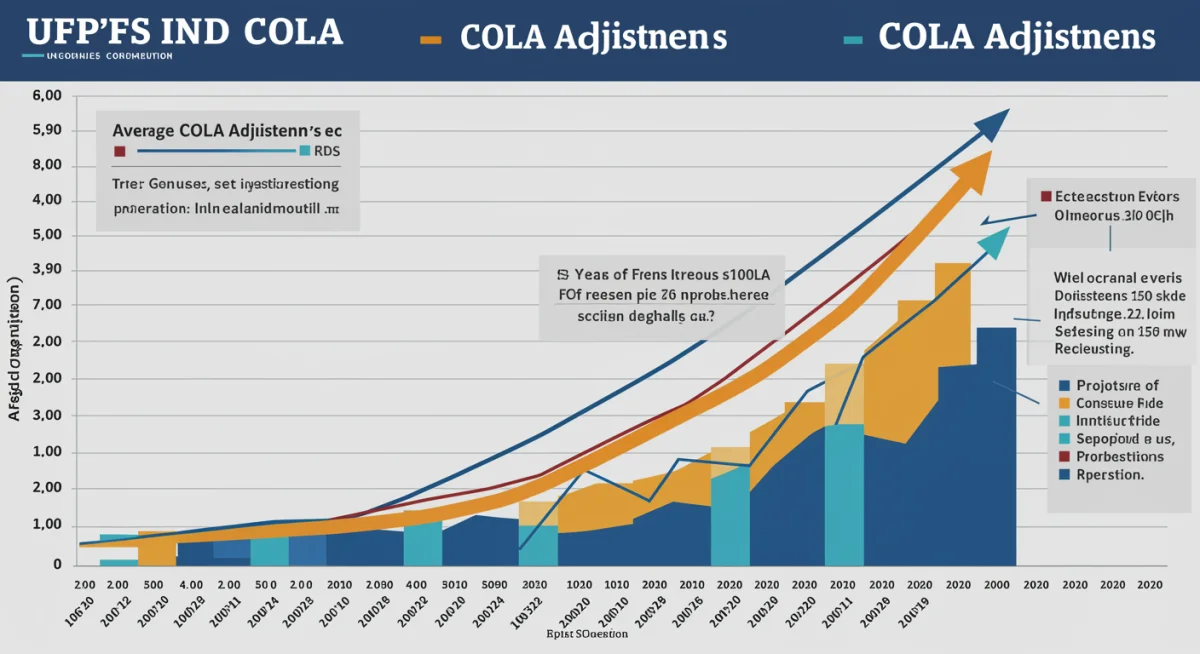
Examining past trends helps beneficiaries and policymakers alike anticipate future scenarios. While a 3.2% projection for 2026 is a solid estimate, it’s part of a larger, ongoing economic narrative.
recent COLA trends
Recent years have seen some of the largest COLA increases in decades, driven by post-pandemic economic fluctuations and global events. These significant adjustments highlight the program’s vital role in shielding beneficiaries from rapid price increases. However, such large increases also place a strain on the Social Security trust funds, sparking ongoing discussions about the program’s long-term solvency.
- Volatility: COLA percentages have shown considerable fluctuation based on economic cycles.
- Inflation Response: Higher COLA often follows periods of significant inflation.
- Policy Debates: The size of COLA adjustments frequently fuels debates about Social Security’s financial health.
The future outlook for COLA adjustments will continue to be tied to the broader economic environment. If inflation remains elevated, beneficiaries can likely expect continued, albeit potentially smaller, increases. Conversely, a return to lower, more stable inflation could lead to more modest COLA percentages. These projections, including the 3.2% for 2026, are thus crucial for financial planning and policy discussions, ensuring the program’s sustainability and effectiveness for future generations.
Preparing for the 2026 COLA: Financial Planning Tips
With the Social Security COLA Projections for 2026 indicating a 3.2% boost, it’s an opportune time for beneficiaries to review and adjust their financial plans. While any increase is welcome, strategic planning can maximize its impact and ensure long-term financial security. This isn’t just about spending the extra money; it’s about making informed decisions that align with your overall financial goals.
Even a modest increase can significantly affect your budget, especially when combined with other income sources. Proactive planning helps you avoid common pitfalls and leverage the COLA to your advantage, whether it’s paying down debt, building savings, or investing in your health.
maximizing your COLA increase
Consider how the additional funds can best serve your financial needs. For some, it might mean addressing immediate expenses or reducing high-interest debt. For others, it could be an opportunity to bolster emergency savings or explore investment options. The key is to have a clear understanding of your financial situation and how this increase can support it.
- Budget Review: Reassess your monthly budget to incorporate the increased income.
- Debt Reduction: Prioritize paying off high-interest debts to save money in the long run.
- Emergency Fund: Boost your emergency savings to create a stronger financial safety net.
- Healthcare Costs: Factor in rising healthcare expenses, which often outpace COLA adjustments.
It’s also important to consider the potential impact of the COLA on other benefits you might receive, as some income-dependent programs may adjust eligibility thresholds. Consulting with a financial advisor can provide personalized guidance, helping you navigate these complexities and make the most of your increased Social Security income. Preparing for the 2026 COLA means more than just anticipating a larger check; it means strategically positioning yourself for greater financial resilience.
The Broader Economic Impact of COLA Adjustments
The annual Cost-of-Living Adjustment, including the Social Security COLA Projections for 2026, extends its influence far beyond individual beneficiaries, impacting the broader economy. These adjustments are not isolated financial events; they ripple through various sectors, affecting consumer spending, government budgets, and even the overall economic outlook. Understanding this broader impact is crucial for appreciating the significance of COLA.
When millions of Americans receive increased benefits, their collective purchasing power rises. This can stimulate consumer demand, which in turn supports businesses and contributes to economic growth. However, large COLA increases also present challenges, particularly for the long-term solvency of the Social Security program itself.
economic ripple effects
Increased Social Security payments tend to boost consumer spending, especially on essential goods and services. This can benefit local economies and industries that cater to retirees and other beneficiaries. However, the source of these payments—the Social Security trust funds—is also affected. Sustained high COLA increases can accelerate the depletion of these funds, leading to calls for policy reforms.
- Consumer Spending Boost: Increased disposable income leads to higher retail sales and service utilization.
- Impact on Trust Funds: Larger payouts can reduce the lifespan of Social Security’s reserves.
- Government Budget: Influences federal spending and revenue projections.
- Inflationary Feedback Loop: Increased spending can sometimes contribute to further inflation, creating a cyclical effect.
Moreover, COLA adjustments can influence financial markets, particularly those related to retirement planning and fixed-income investments. Investors and financial institutions closely watch these projections to gauge economic health and adjust strategies. The 3.2% projection for 2026 thus serves as a key indicator, providing insights not only for beneficiaries but also for economists, policymakers, and market analysts who monitor the health and direction of the national economy. These adjustments embody a delicate balance between supporting beneficiaries and ensuring the fiscal responsibility of a foundational social program.
| Key Point | Brief Description |
|---|---|
| 2026 COLA Projection | Anticipated 3.2% increase in Social Security benefits. |
| COLA Calculation | Determined by CPI-W changes from Q3 data, adjusting for inflation. |
| Beneficiary Impact | Helps maintain purchasing power against rising living costs. |
| Financial Planning | Opportunity to review budgets, reduce debt, or boost savings. |
Frequently Asked Questions About the 2026 COLA
The Cost-of-Living Adjustment (COLA) is an annual increase in Social Security and Supplemental Security Income (SSI) benefits. Its purpose is to offset the effects of inflation, ensuring that the purchasing power of these benefits is maintained over time for millions of Americans.
The COLA is primarily based on the Consumer Price Index for Urban Wage Earners and Clerical Workers (CPI-W). The 3.2% projection for 2026 reflects anticipated changes in this index, comparing inflation data from specific quarters to determine the necessary adjustment.
The official COLA announcement typically occurs in October of the preceding year. For the 2026 COLA, the Social Security Administration will announce the final percentage in October 2025, after reviewing the third-quarter inflation data.
Yes, an increase in Social Security benefits due to COLA might affect eligibility for certain income-dependent programs, such as Medicaid or SNAP. It’s advisable to check with the administrators of other benefits you receive to understand any potential impacts.
Review your current budget and financial goals. Consider how the additional funds can best be utilized, whether for paying down debt, increasing savings, or managing rising expenses. Consulting a financial advisor can provide tailored strategies for your situation.
Conclusion
The Social Security COLA Projections for 2026, anticipating a 3.2% boost in payments, underscore the critical role this adjustment plays in the financial well-being of millions of Americans. As inflation continues to be a factor in the economic landscape, these increases are more than just numerical adjustments; they are vital safeguards designed to ensure that beneficiaries can maintain their standard of living. Understanding how COLA is calculated, its historical context, and its broader economic implications empowers individuals to make informed financial decisions. This proactive approach ensures that the Social Security program remains a robust and responsive pillar of financial security for current and future generations.