2026 Social Security COLA: What Retirees Need to Know

Anúncios
The financial landscape for retirees is constantly evolving, and one of the most significant factors influencing their income is the Social Security Cost-of-Living Adjustment (COLA). As we look towards the future, understanding the 2026 Social Security COLA becomes paramount for effective retirement planning. This comprehensive guide will meticulously decode what the 2026 COLA might entail, how it’s calculated, its historical context, and, most importantly, what recent updates mean for your retirement income. Whether you’re already receiving benefits or planning for them, grasping the nuances of the COLA is essential for maintaining your purchasing power in the face of inflation.
Anúncios
Decoding the 2026 Social Security Cost-of-Living Adjustment (COLA): What It Means for Your Retirement Income (RECENT UPDATES)
Social Security benefits are a lifeline for millions of Americans, providing crucial financial support in retirement, disability, and survivorship. A key feature designed to protect beneficiaries from the erosion of purchasing power due to inflation is the annual Cost-of-Living Adjustment, or COLA. Each year, the Social Security Administration (SSA) announces a COLA, which adjusts benefits to reflect changes in the cost of living. While the 2026 COLA might seem distant, understanding the factors that will shape it and preparing for its potential impact is a proactive step toward securing your financial future.
Understanding the Social Security COLA Mechanism
Before diving into projections for the 2026 Social Security COLA, it’s vital to comprehend how this adjustment is determined. The COLA is calculated based on the Consumer Price Index for Urban Wage Earners and Clerical Workers (CPI-W). Specifically, the SSA compares the average CPI-W for the third quarter (July, August, and September) of the current year with the average CPI-W for the third quarter of the previous year in which a COLA was effective. The percentage increase, if any, between these two averages becomes the COLA for the following year. If there is no increase, there is no COLA.
Anúncios
This mechanism is designed to ensure that Social Security benefits keep pace with inflation, helping beneficiaries maintain their standard of living. However, critics often point out that the CPI-W may not accurately reflect the spending patterns and costs faced by seniors, particularly regarding healthcare, which tends to rise faster than other goods and services. This ongoing debate about the adequacy of the CPI-W as the benchmark for COLA calculations is a significant aspect to consider when discussing future adjustments, including the 2026 Social Security COLA.
The COLA is not a guarantee; it is dependent on inflationary pressures. In periods of low or no inflation, the COLA could be minimal or even zero. This happened in 2010, 2011, and 2016, where beneficiaries received no COLA due to a lack of significant inflation as measured by the CPI-W. Such instances highlight the importance of not relying solely on the COLA for significant increases in retirement income, but rather viewing it as a protective measure against inflation.
Historical Context of COLA Adjustments
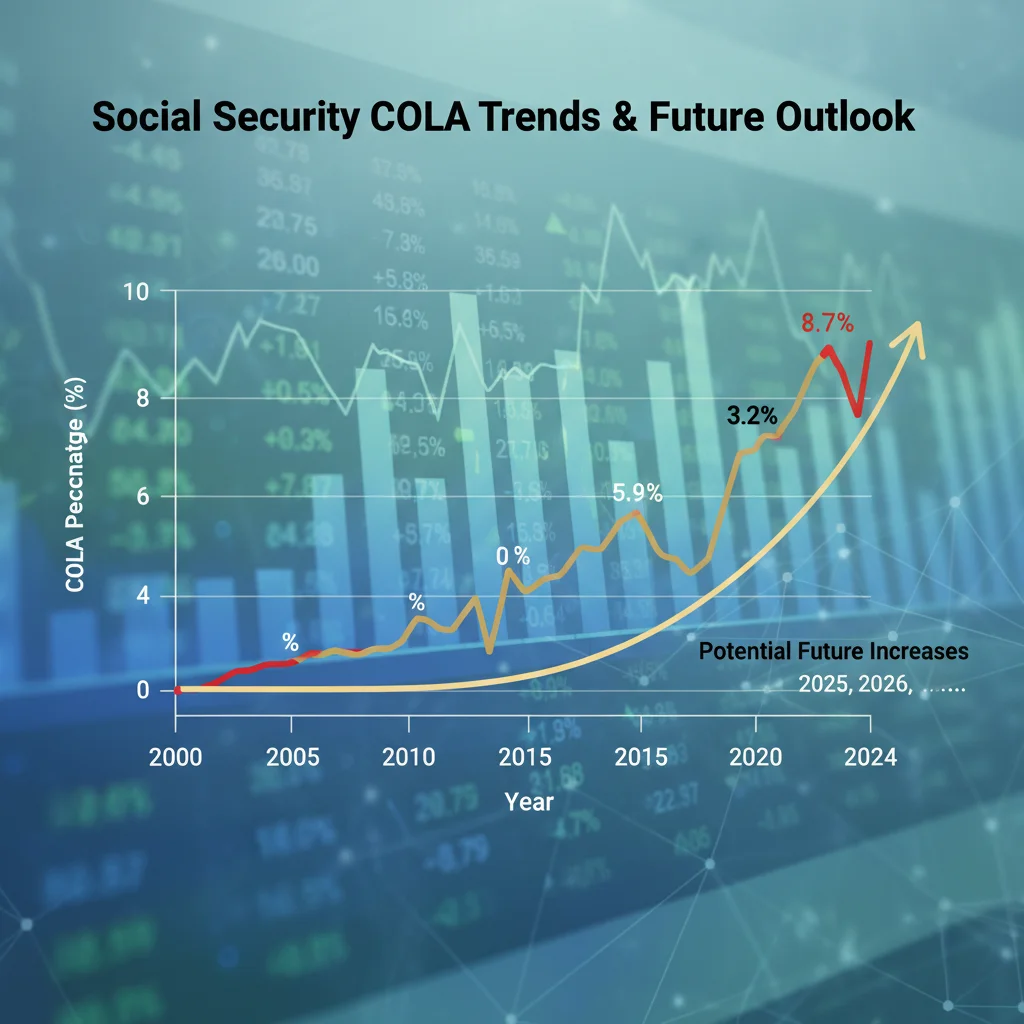
Examining historical COLA adjustments provides valuable context for predicting the 2026 Social Security COLA. Over the decades, COLA percentages have varied widely, reflecting different economic environments. For example, the 1970s and early 1980s saw very high COLA percentages due to rampant inflation, with the 1980 COLA hitting a record 14.3%. In contrast, more recent years have seen more modest adjustments, with some years yielding no increase at all.
The average COLA over the past few decades has typically hovered around 2-3%. However, recent years have been exceptional. The 5.9% COLA for 2022 and the 8.7% COLA for 2023 were the largest in decades, driven by a surge in inflation following the COVID-19 pandemic and global supply chain disruptions. These significant increases underscore the direct link between prevailing economic conditions and the COLA. Understanding these historical patterns helps us anticipate the potential range for the 2026 Social Security COLA, although direct predictions remain challenging due to the dynamic nature of economic indicators.
The impact of these historical adjustments extends beyond just the benefit amount. A higher COLA means increased taxable income for some beneficiaries, and it can also affect eligibility for certain means-tested programs. Therefore, retirees must consider the broader implications of any COLA, not just the raw percentage increase. This holistic view is crucial for sound financial management in retirement.
Factors Influencing the 2026 Social Security COLA
Predicting the exact 2026 Social Security COLA is akin to forecasting the weather two years out – there are many variables, and conditions can change rapidly. However, we can identify key economic indicators that will heavily influence the eventual adjustment:
- Inflationary Pressures: This is the most direct driver. The sustained level of inflation, particularly as measured by the CPI-W, in 2024 and 2025 will be the primary determinant. Factors such as energy prices, food costs, housing expenses, and global supply chain stability will all play a role.
- Wage Growth: While not directly used in the COLA calculation, strong wage growth can contribute to overall economic demand, potentially fueling inflation. Conversely, stagnant wages might signal weaker inflationary pressures.
- Interest Rates: Central bank policies, especially interest rate decisions, influence economic activity and inflation. Higher interest rates are typically used to cool down an overheating economy and curb inflation, which could lead to a lower COLA.
- Geopolitical Events: Global events, such as conflicts or trade disputes, can disrupt supply chains and commodity markets, leading to unpredictable spikes in inflation. These external factors are difficult to forecast but can have a profound impact.
- Consumer Spending Habits: Robust consumer spending can indicate a strong economy and potentially higher inflation. Conversely, a slowdown in spending could alleviate inflationary pressures.
Monitoring these indicators throughout 2024 and 2025 will provide a clearer picture of what the 2026 Social Security COLA might look like. Economic forecasts from various institutions, such as the Congressional Budget Office (CBO), the Social Security Administration’s actuaries, and private financial firms, will offer preliminary estimates, though these are subject to considerable revision as actual economic data becomes available.
Recent Updates and Their Potential Impact on 2026 COLA
While specific projections for the 2026 Social Security COLA are still speculative, recent economic trends and updates provide valuable clues. Following the elevated inflation of 2021-2023, there have been signs of inflation moderating. Central banks globally have taken aggressive measures to combat rising prices, and supply chains have largely normalized. However, certain sectors, like housing and services, have shown persistent inflationary tendencies.
Economists are divided on whether inflation will return to pre-pandemic levels of around 2% or settle at a slightly higher plateau. If inflation continues to cool steadily, the 2026 Social Security COLA could be more modest than the adjustments seen in 2022 and 2023. Conversely, any resurgence of inflationary pressures due to unforeseen economic shocks or policy shifts could lead to a higher COLA. It’s crucial for beneficiaries to stay informed about these macroeconomic shifts, as they directly correlate with their future benefit adjustments.
Furthermore, discussions about potential changes to the COLA calculation methodology periodically resurface in Congress. Proposals to use a different inflation index, such as the Consumer Price Index for the Elderly (CPI-E), which is believed to better reflect senior spending habits, could significantly alter future COLA outcomes. While no immediate changes are anticipated for the 2026 Social Security COLA, remaining aware of these ongoing policy debates is important for long-term planning.
How the 2026 COLA Could Affect Your Retirement Income
The 2026 Social Security COLA will directly impact the monthly benefit checks of millions of retirees. A higher COLA means a larger benefit amount, which can help offset rising costs of living. Conversely, a lower or zero COLA means your benefit amount remains stagnant, potentially leading to a decrease in real purchasing power if inflation continues, even at a slower pace.
Beyond the direct increase in your monthly check, the COLA can have several other financial implications:
- Medicare Part B Premiums: Historically, a portion of the COLA can be offset by increases in Medicare Part B premiums. While the ‘hold harmless’ provision often protects many beneficiaries from a net decrease in their Social Security check due to premium hikes, those with higher incomes may still see their net benefit impacted.
- Taxation of Benefits: Social Security benefits can be taxable if your combined income (adjusted gross income + non-taxable interest + half of your Social Security benefits) exceeds certain thresholds. A higher COLA could push some beneficiaries into a higher income bracket, potentially making a larger portion of their benefits taxable.
- Planning for Other Income Streams: Understanding the potential COLA helps retirees better plan how their other income sources, such as pensions, 401(k) withdrawals, and investments, need to supplement their Social Security benefits. If the COLA is lower than anticipated, you might need to adjust your withdrawal strategies from other retirement accounts.
- Budgeting: A clear understanding of the expected COLA allows for more accurate budgeting. Knowing how much your Social Security income is likely to increase (or not) helps in managing daily expenses, healthcare costs, and discretionary spending.
Therefore, tracking the economic indicators and expert forecasts for the 2026 Social Security COLA is not just an academic exercise; it’s a practical necessity for informed retirement financial planning. It allows you to make adjustments to your budget and investment strategies well in advance.
Strategies for Retirement Planning Amidst COLA Uncertainty
Given the inherent uncertainty of future COLA adjustments, especially for the 2026 Social Security COLA, retirees and those nearing retirement should adopt robust financial planning strategies:
- Diversify Income Streams: Do not rely solely on Social Security. Build a diversified retirement income portfolio that includes savings, investments (stocks, bonds, real estate), and potentially part-time work. This diversification provides a buffer against low COLA years.
- Factor in Healthcare Costs: Healthcare expenses are a major concern for seniors and often rise faster than general inflation. Budget explicitly for healthcare, including Medicare premiums, deductibles, co-pays, and potential long-term care needs.
- Delay Social Security if Possible: For every year you delay claiming Social Security benefits past your full retirement age (up to age 70), your benefit amount increases by a certain percentage (8% per year for those born in 1943 or later). This guaranteed increase can provide a more substantial boost to your income than the annual COLA.
- Monitor Inflation and Economic News: Stay informed about economic trends, inflation rates, and any proposed legislative changes to Social Security. This knowledge empowers you to make timely adjustments to your financial plan.
- Consult a Financial Advisor: A qualified financial advisor can help you create a personalized retirement plan that accounts for potential COLA fluctuations, inflation, and your individual financial goals. They can assist with investment strategies, tax planning, and optimizing your Social Security claiming decision.
Proactive planning and flexibility are key. While the 2026 Social Security COLA will play a role, it’s one piece of a larger retirement puzzle. By building a resilient financial plan, you can better navigate the uncertainties and ensure a comfortable retirement.

The Broader Economic Picture and the 2026 COLA
The economic environment leading up to 2026 will be a complex interplay of domestic and global factors. Post-pandemic recovery, ongoing geopolitical tensions, technological advancements, and shifts in labor markets will all contribute to the overall inflation picture. For instance, continued advancements in artificial intelligence and automation could impact productivity and potentially lead to disinflationary pressures in some sectors, while others might experience cost increases due to labor shortages or increased demand.
Government fiscal policies, including spending and taxation, will also influence inflation. Large government spending initiatives, if not offset by increased productivity or revenue, could fuel inflation. Conversely, efforts to reduce national debt or control spending might help stabilize prices. These broader economic trends are critical background noise when trying to anticipate the 2026 Social Security COLA. It’s not just about consumer prices in isolation, but how these prices are shaped by the larger economic machine.
Moreover, global economic growth rates and trade dynamics can impact the cost of imported goods, which, in turn, influences domestic inflation. A strong global economy might lead to higher commodity prices, while a slowdown could have the opposite effect. Therefore, understanding the global economic outlook is an integral part of forming an educated guess about the future COLA.
Conclusion: Preparing for the 2026 Social Security COLA
The 2026 Social Security COLA is a crucial adjustment that will directly influence the financial well-being of millions of retirees. While the exact percentage remains unknown and subject to future economic conditions, understanding the calculation methodology, historical trends, and influencing factors empowers you to make informed decisions.
By staying vigilant about inflation rates, economic forecasts, and potential policy changes, and by adopting a proactive and diversified approach to retirement planning, you can better prepare for whatever the 2026 Social Security COLA brings. Remember, Social Security is a foundational element of retirement security, but it’s most effective when integrated into a comprehensive financial strategy. Start planning today to ensure your retirement income keeps pace with the evolving cost of living.